Marc Benioff: Revolutionizing CRM with Salesforce's Cloud Model and 1-1-1 Philanthropy
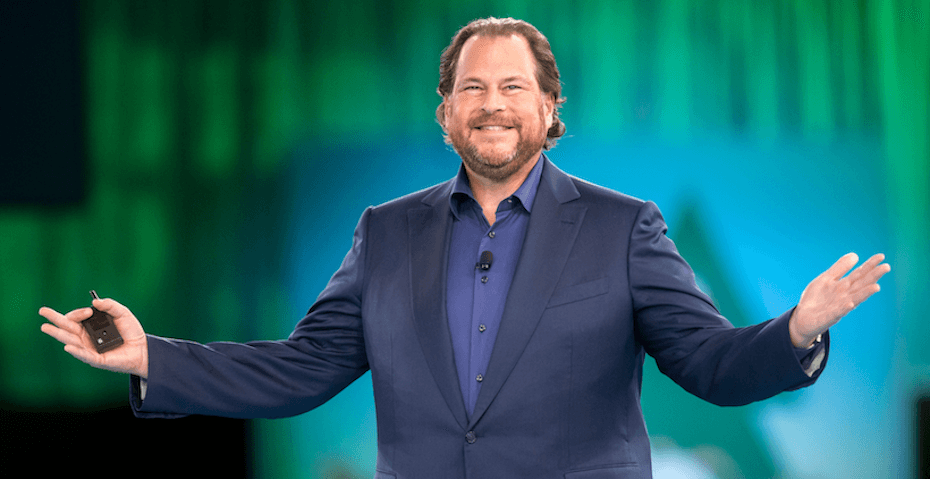
Marc Benioff emerged from a background that blended curiosity with a drive for creation, growing up in San Francisco during the dawn of the personal computing era. Born in 1964, he displayed an early fascination with technology, teaching himself programming at age 15 by developing video games on the Atari. This self taught aptitude led him to the University of Southern California, where he studied business and immersed himself in computer science courses. His time there coincided with the rapid evolution of software, sparking ideas about accessible data management that would later shape his career. After college, Benioff joined Oracle Corporation at just 19, becoming one of its youngest employees. Under the mentorship of Larry Ellison, he rose quickly through sales and development roles, contributing to database software that powered early enterprise systems. These years honed his understanding of customer relationship management, or CRM, revealing inefficiencies in traditional software distribution. Benioff’s experiences at Oracle taught him the value of scalable solutions, but he envisioned a future where software lived in the cloud, free from hardware constraints. This perspective fueled his departure in 1999 to found Salesforce, a bold move to disrupt the industry with a subscription based, internet delivered CRM platform. From modest beginnings in a small apartment, the company focused on delivering tools that empowered sales teams with real time data insights, transforming how businesses interacted with clients. Benioff’s emphasis on user friendliness made CRM accessible to small firms, democratizing tools once reserved for large corporations. His innovative approach integrated web technologies early, allowing seamless updates and customization without costly installations. This cloud first strategy not only streamlined operations but also reduced environmental impact by minimizing physical infrastructure needs. Benioff’s leadership style encouraged experimentation, fostering a culture where teams iterated rapidly on feedback, leading to features like mobile access that anticipated the smartphone boom. As Salesforce grew, it attracted talent eager to build something revolutionary, creating a ripple effect in Silicon Valley. Benioff’s vision extended beyond product to community building, hosting events like Dreamforce that connected users and developers in collaborative learning. These gatherings became platforms for sharing best practices, amplifying the positive reach of cloud technology. His commitment to ethical development ensured privacy safeguards were baked in from the start, setting standards for data handling in enterprise software. Through these foundations, Benioff laid the groundwork for a tech landscape where innovation serves practical, inclusive growth.
The trajectory of Salesforce under Benioff’s guidance accelerated as the company navigated the dot com recovery, proving the viability of cloud computing in a skeptical market. By 2004, Salesforce had achieved profitability, with its platform handling millions of transactions daily, enabling businesses to forecast sales and nurture leads more effectively. Benioff’s strategy of acquiring complementary technologies, such as ExactTarget for marketing automation, expanded the ecosystem into a comprehensive suite. This integration allowed companies to unify customer data across departments, enhancing personalization and efficiency. His foresight in embracing artificial intelligence through Einstein AI introduced predictive analytics, helping users anticipate customer needs and optimize strategies. Benioff’s advocacy for open platforms invited third party developers to build on Salesforce, creating an AppExchange marketplace that spurred thousands of custom solutions. This collaborative model boosted economic opportunities for small developers worldwide, turning Salesforce into a launchpad for innovation. Benioff’s international expansion established data centers globally, ensuring compliance with regional regulations and low latency for users in diverse markets. His efforts in education, partnering with universities to offer certifications, equipped professionals with cloud skills, bridging talent gaps in emerging economies. These initiatives not only grew Salesforce’s valuation to billions but also influenced how other firms approached software as a service. Benioff’s personal involvement in product roadmaps ensured that updates addressed real world challenges, like scalability for growing enterprises. His emphasis on security, with features like multi factor authentication, built trust among users handling sensitive information. Through relentless focus on customer success, Benioff transformed CRM from a niche tool into an essential driver of business intelligence. This period solidified his reputation as a forward thinking executive whose expertise reshaped digital operations for the better.
Benioff’s early innovations set Salesforce on a path of sustained growth, influencing the broader adoption of cloud technologies across industries. His creation of a multi tenant architecture allowed resources to be shared efficiently, reducing costs and promoting sustainability.
Building on these successes, Benioff introduced the 1-1-1 philanthropy model in 1999, pledging one percent of equity, product, and employee time to charitable causes. This framework integrated giving into the company’s DNA, inspiring a movement where business success funds community support. From the outset, Salesforce donated software to nonprofits, enabling organizations to manage donors and volunteers more effectively. Employee volunteerism hours translated into hands on projects, from coding workshops to disaster relief coordination. Benioff’s vision extended this to the sector at large, co founding the Pledge 1% initiative with other CEOs, which has engaged thousands of companies worldwide. This collaborative effort has mobilized billions in resources, amplifying positive impact on education, health, and equality. Benioff’s personal foundation supported causes like homelessness in San Francisco, funding shelters and job training programs that uplifted local communities. His advocacy for corporate social responsibility elevated discussions on how leaders can align profits with purpose, influencing boardrooms globally. Through Salesforce.org, the company tailored its platform for nonprofits, streamlining grant management and impact measurement. Benioff’s transparent reporting on philanthropic outcomes encouraged accountability, setting benchmarks for measurable good. This holistic approach not only enriched Salesforce’s culture but also motivated employees, fostering a sense of fulfillment alongside professional achievement. His expertise in blending business acumen with altruism created a blueprint for sustainable enterprise, where innovation serves humanity.

Marc Benioff’s tenure at Salesforce exemplified how strategic philanthropy could enhance core operations, turning giving into a competitive advantage that strengthened brand loyalty and employee engagement. The 1-1-1 model evolved into a robust system, with Salesforce matching employee donations and providing grants that supported global initiatives in digital inclusion. This commitment manifested in partnerships with organizations addressing education disparities, where cloud tools empowered teachers to track student progress in remote areas. Benioff’s leadership in launching the Salesforce Foundation focused on workforce development, offering free training to underrepresented groups entering tech. His vision for equality extended to gender diversity, with programs like Trailblazers providing mentorship for women in STEM, increasing participation and innovation in the field. As CEO, Benioff championed environmental sustainability, committing Salesforce to carbon neutrality and influencing supply chain partners to adopt green practices. This forward thinking reduced the company’s footprint while inspiring peers to prioritize eco friendly operations. The acquisition of companies like Tableau bolstered data visualization capabilities, allowing nonprofits to analyze impact more deeply, from health outcomes to economic empowerment. Benioff’s annual Dreamforce conferences incorporated philanthropy tracks, connecting attendees with causes and amplifying fundraising efforts. His personal advocacy, including time spent on nonprofit boards, demonstrated hands on commitment, encouraging executives to view social impact as integral to leadership. Through these efforts, Benioff’s expertise transformed Salesforce into a force for good, where technological prowess met compassionate action. The ripple effects reached international development, with Salesforce powering aid distribution in crisis zones, enhancing efficiency and transparency. His model of integrated giving has been studied in business schools, shaping curricula on ethical leadership and sustainable practices.
Benioff’s influence on industry standards grew as Salesforce became synonymous with customer success, a philosophy that prioritized long term relationships over transactions. His introduction of the Ohana culture emphasized family like support within teams, leading to high retention and creative output. This internal harmony translated to external partnerships, where collaborative tools like Slack, acquired in 2021, enhanced workplace connectivity globally. Benioff’s strategic decisions during economic shifts ensured resilience, with cloud solutions adapting to hybrid work demands. His advocacy for data privacy shaped legislative discussions, promoting frameworks that protected users while enabling innovation. Through these contributions, Benioff elevated enterprise software to a tool for empowerment, influencing how businesses operate ethically and efficiently. Global adoption of Salesforce’s model, inspired by Benioff’s expertise, has empowered millions by integrating AI ethically into daily workflows. Features like automated insights help users make informed decisions, boosting productivity without ethical compromises. His focus on accessibility ensured tools worked for diverse users, from startups to governments, fostering inclusive economic growth. Benioff’s legacy in this domain continues to guide tech evolution toward responsible, human centered design.
Marc Benioff’s contributions to cloud computing have democratized enterprise tools, allowing businesses of all sizes to leverage advanced analytics for strategic advantage. Salesforce’s platform, with its vast ecosystem, supports over 200,000 organizations worldwide, streamlining operations from sales to service. His emphasis on integration with emerging technologies like blockchain has opened new avenues for secure transactions, enhancing trust in digital commerce. Benioff’s vision for the Internet of Things connected CRM to real world data streams, enabling predictive maintenance in industries like manufacturing. This foresight has driven efficiency gains, reducing waste and accelerating innovation cycles. His role in standardizing cloud APIs has facilitated interoperability, allowing seamless data flow across systems. Through educational outreach, Benioff’s initiatives have trained over a million professionals, building a skilled workforce that propels economic development. His influence extends to sustainability, with Salesforce’s net zero commitments inspiring sector wide shifts toward renewable energy in data operations. Benioff’s expertise has thus created a more connected, efficient business landscape, where technology amplifies human potential.
The philanthropic dimension of Benioff’s work has redefined corporate citizenship, with the 1-1-1 model adopted by over 10,000 companies, channeling resources to vital causes. This collective effort has funded scholarships, health programs, and community centers, uplifting lives on a massive scale. Benioff’s advocacy for equality in tech has increased diversity hiring, with Salesforce achieving significant representation milestones that set industry examples. His foundation’s work on homelessness has provided permanent housing solutions, demonstrating scalable social innovation. Through global partnerships, Benioff’s efforts have supported disaster recovery, using cloud tech for rapid response coordination. This blend of business and benevolence has inspired a generation of leaders to embed purpose in their ventures.
Benioff’s broader societal impact shines through initiatives like the Time Journal, which promotes work life balance by tracking employee hours against productivity. This tool has influenced labor practices, encouraging healthier corporate environments. His commitment to veterans, via hiring programs and skills training, has integrated military talent into tech, enriching innovation with diverse perspectives. Benioff’s thought leadership in books and forums has shaped dialogues on compassionate capitalism, urging businesses to measure success beyond finances. These contributions highlight his role in fostering a world where enterprise drives equitable progress.
The enduring effects of Benioff’s philanthropy are evident in empowered nonprofits using Salesforce to amplify their missions, from environmental conservation to youth education. His model of giving back has created a virtuous cycle, where successful companies reinvest in communities that sustain them. (202 words)
Marc Benioff’s journey from a young coder to a titan of industry underscores the power of visionary thinking coupled with ethical grounding. His innovations in cloud CRM have revolutionized how businesses engage with customers, fostering loyalty and growth on a global scale. The 1-1-1 model’s widespread adoption has mobilized unprecedented resources for social good, from bridging digital divides to supporting health equity. Benioff’s emphasis on culture and inclusion has built resilient organizations that thrive amid change. His influence on sustainable practices has guided tech toward environmental stewardship, ensuring long term viability. Through acquisitions and expansions, Salesforce under Benioff has become a hub for AI driven insights, empowering users to navigate complexity with confidence. His personal involvement in causes like education reform has directly improved opportunities for countless individuals. Benioff’s philosophy of ohana extends to global networks, creating communities of shared purpose. This comprehensive legacy inspires entrepreneurs to pursue innovation that aligns with human values, proving that business excellence and positive impact can coexist harmoniously. As his expertise continues to shape the digital economy, Benioff’s work serves as a beacon for creating meaningful change.